Félicia Atkinson & Christina Vantzou :: Reflections Vol. 3: Water Poems
Experimental ambient, field recordings, piano and porous soundscapes
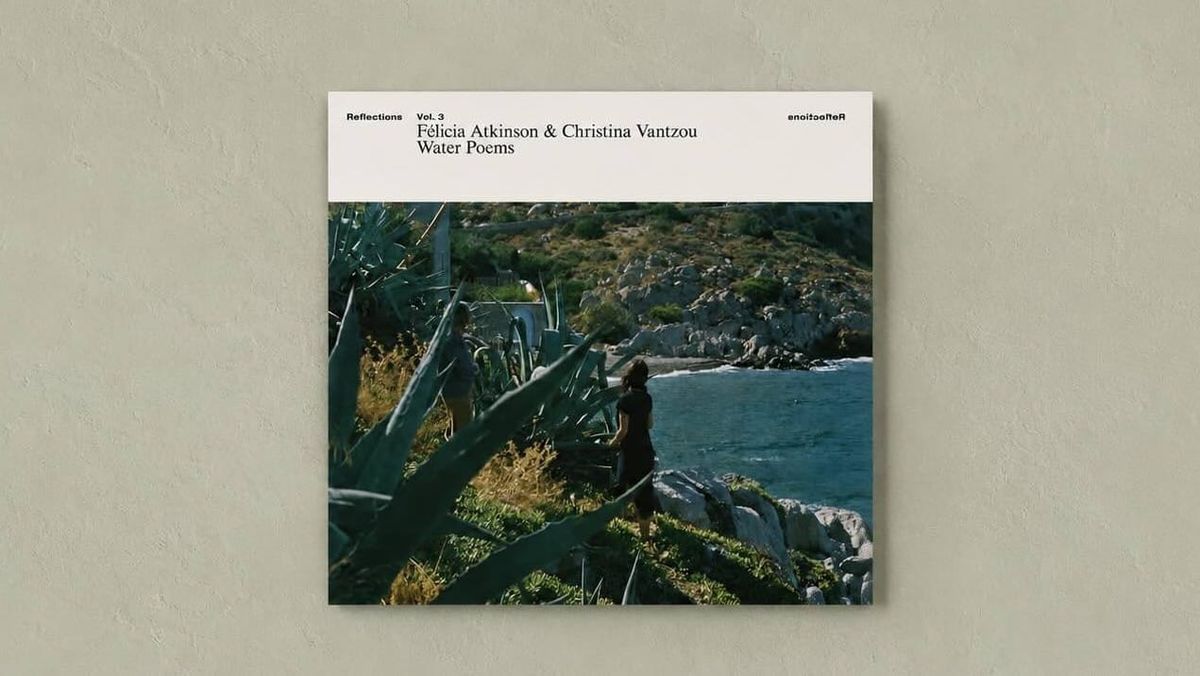
At Delphi the water is almost inaudible. There is a piano, a few birds, a voice too close to the microphone, and the sound of something that seems to have happened before the recorder was switched on.
Reflections Vol. 3: Water Poems grew out of the third collaborative commission in RVNG Intl.'s Reflections series, though the collaboration itself goes back much further. Atkinson and Vantzou have known each other since 2009 and have played together before. These recordings were made across the Old Carpet Factory on Hydra, Villa Medici in Rome, and Les Dunes, Atkinson's studio in Normandy; Vantzou also brought field recordings from Delphi and the thermal springs of Eftalou on Lesbos. The final mix happened at a distance, files passing back and forth while she was in Crete.
“Film Still / The Sea” begins with a handful of piano notes. Around them, material gathered at Delphi — rustling, birds, small accidents — makes the distance between what was composed and what was already there less certain. Atkinson and Vantzou keep their voices low, almost to the side, like a conversation caught by mistake.
“A Secret” lasts barely more than two minutes: drone, whispered words, a dark floor of sound and not much attempt to give the voice its usual place at the front. “With / You / Movement / Creatures” is more tactile. Vibraphone, gong and synthesizers sit among recordings of the waters at Eftalou.
“Shines for Eternity” has one of the odder credits on the album. Vantzou plays processed liquids alongside synthesizers while Atkinson handles voice and piano. After a while it is difficult to hear the liquid sounds as atmosphere at all. They knock about with everything else.
Whether that makes water an instrument is probably less interesting than the fact that the distinction stops being especially useful.
“Little Piano Rivers” sends Rhodes and piano through small branching courses; “Amour, a liquid state” opens into broader, almost science-fictional synths. I find the latter slightly harder to place. Its scale is more obviously beautiful, perhaps too obviously so, and for a moment the record approaches the kind of ambient grandeur it has mostly managed to avoid.
“You Are Porous” is stranger. Metallophone, piano and voices come very close to the microphone, and somewhere outside a siren passes through. Nobody appears to have felt obliged to remove it. It stays there, indifferent to the piece, which may be why it becomes one of the sounds I remember most.
The nine minutes of “Scorpio Purple Skies”, with John Also Bennett on electric guitar and lap steel, take the record somewhere drier. Long synth masses remain, stretched strings, a lot of exposed air. The sea is still presumably nearby, but you no longer need to hear it.
“Film Still / The Sea”
Piano, Delphi field recordings and voices kept low enough for composition and location to begin sharing the foreground.
“You Are Porous”
Metallophone, piano, close voices and a passing siren nobody felt obliged to remove.
“Scorpio Purple Skies”
Electric guitar, lap steel and long synth masses take the album somewhere drier without quite leaving the sea behind.
Atkinson has said that she did not approach the sea as a monolithic postcard, but as a complicated presence that people living on a coast have to negotiate with every day. That seems close to what the album actually does, although not every track needs the idea equally. Some simply contain water, some have been altered by it, and occasionally it is hard to know whether a sound was intended to be part of the music in the first place.
By the end, that uncertainty matters more than any aquatic concept. You can hear two composers, several places, instruments, weather, plumbing perhaps, things outside the microphone's attention. Not all of it belongs neatly to anyone.