Chelsea Wolfe :: The Dark
Gothic pop, dark folk, distortion, folklore and songs breached from within
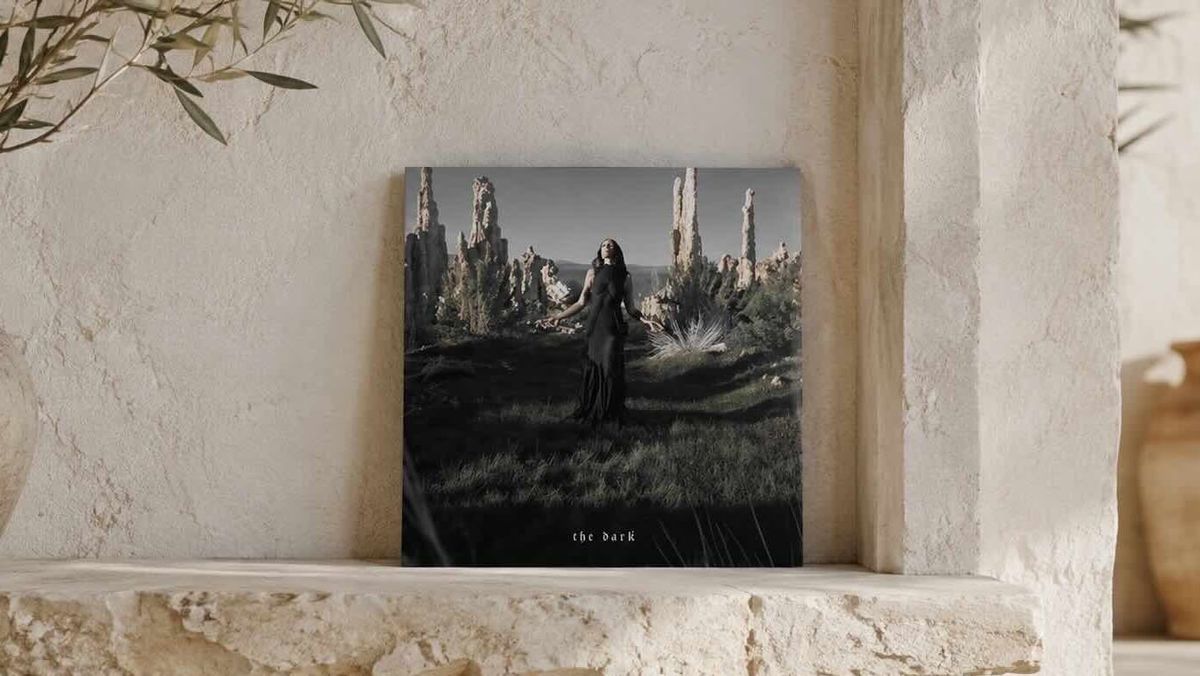
There are an unusual number of things in The Dark that can be opened, entered, swallowed, recovered or kept from somebody.
A key. A well. A skin. Woods. A séance. Even the songs behave this way. Their surfaces look cleaner than Chelsea Wolfe’s old ones, then something gets through.
“Cold” almost refuses the game. Acoustic guitar, large piano notes, Wolfe placed close enough that very little has to be excavated. She has called it the record’s first song and the one that established its sonic direction; she also knew it was unusually direct. You hear the decision immediately. The relationship is finished before the arrangement has had a chance to make the facts difficult.
It is beautifully made. I kept waiting for it to misbehave.
“Seethe” does. Wolfe began it on bass, unusual for her, wanting the sensation of forward motion, something close to a train starting to leave its rails. The bass does not decorate the song; it takes possession of its legs. Guitars have to follow. For three minutes Wolfe’s music stops waiting for darkness to gather around it and simply moves.
Then “Humours” lets other people in. Its chorus was originally faster and more pop-facing before Wolfe pulled it back to acoustic guitar and rewrote it; yet very little of the finished track feels acoustic, and some of its choices, handled with almost too much assurance, occasionally threaten to slip into sepia-toned goth-pop. Kælan Mikla arrive later in murmurs and shrieks, sounds that seem to have entered without agreeing to Wolfe’s standards of good behaviour. They leave marks. The track is better for having failed to seal itself.
That becomes the useful rule here. The Dark weakens when everything stays where it has been placed.
“Swallower” is too full to stay tidy. Wolfe found the title in Nordic troll mythology — hvélsvelg himins, the swallower of the wheel of heaven — and linked the well to the portal in Murakami’s The Wind-Up Bird Chronicle. The song carries all this cumbersome scaffolding without embarrassment. A bottomless appetite deserves that kind of excess. Heavy guitars drag it downward; Troy Van Leeuwen enters like material hauled up from another excavation, rough enough that the track cannot polish him away. And yet, for all its radio-ready markings, it remains a very good song. In some of its guitar tones and arrangement choices, I can hear something of James Iha during the Smashing Pumpkins’ Siamese Dream period: distortions coming from a bored moon, absorbed by warped microorganisms that granulate melancholy.
“Halo”, by comparison, keeps almost nothing outside its original outline. Wolfe deliberately left it close to the demo, stripped down for a post-apocalyptic love song. It is graceful and strangely impermeable. I admire it. Then it closes and gives very little back.
By “Turn the Key” the album has started naming its own mechanism. Wolfe described the song as a séance for herself, a way of calling back what had been surrendered; she also wanted the chorus heavier because the lyric had reached the point of being fed up. The guitars arrive with the appropriate lack of tact. Here heaviness is useful because it forces an opening instead of merely increasing scale.
The title track works differently. Fingerpicked guitar, piano, a low electronic pressure. Nothing breaks. The parts slowly alter what can be seen around Wolfe’s voice. Darkness behaves like poor eyesight: remain inside it and objects return one by one.
Then “Death Is Not the End” tears the process apart. It begins close to acoustic strings and breath. Robin Finck’s guitar eventually comes through in a distorted mass and the folk skeleton briefly gives way beneath it. The interruption matters more than the volume. When the quieter material returns, it has already been touched by something it cannot undo.
Underneath is the selkie: skin stolen, life on land, skin recovered, return to the sea. Wolfe has connected the song to séance, ancestral lineage and that old story of somebody forced into the wrong shape until the means of departure is found again. Folklore keeps one unpleasant detail that recovery songs often discard. The selkie gets herself back. Her children still lose her.
“Seethe”
Bass gives the song legs and forward pressure, making Wolfe’s music move before darkness has time to gather around it.
“Swallower”
Troll mythology, a bottomless well and Troy Van Leeuwen’s guitar make excess useful precisely because the song refuses to stay tidy.
“Death Is Not the End”
Acoustic strings and breath are breached by Robin Finck’s distorted guitar, leaving the quieter material permanently altered.
The Dark contains plenty of language about release, boundaries and reclaiming oneself. Other reviews have understandably made that the centre of the record.
The best songs here do not simply open. Something gets in.
A bass line. Three Icelandic voices. Van Leeuwen’s guitar. Finck tearing through an acoustic song. A dead relative called across a séance. An old animal skin that has spent years hidden from its owner.
Wolfe has made heavier albums and stranger ones. On The Dark, strangeness survives mostly at the points where control fails to keep the border.
The key turns. The well stays open.